Introduction
The difference between good athletes and great athletes often isn’t talent or training volume—it’s recovery capacity. While most athletes obsess over their workout programs, the real performance gains happen during recovery. If you’re training hard but recovering slowly, you’re leaving significant gains on the table.
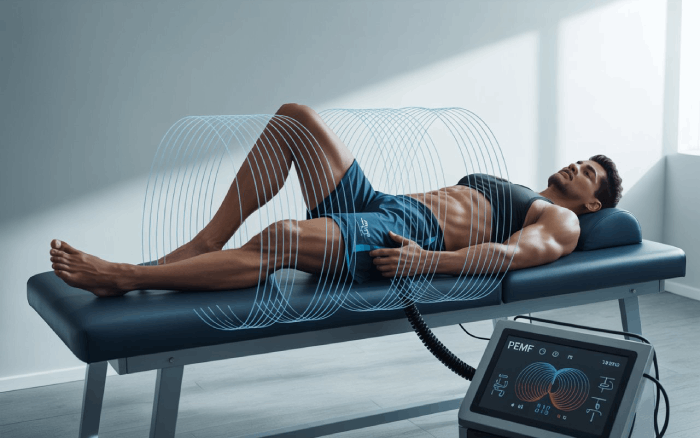
Pulsed Electromagnetic Field (PEMF) therapy has emerged as a powerful recovery tool used by elite athletes and accessible to anyone serious about performance. This guide breaks down exactly how to use PEMF for athletic recovery, including specific protocols, timing strategies, and sport-specific applications that most articles overlook. You’ll learn what works, what doesn’t, and how to build a PEMF recovery routine that delivers measurable results.
How PEMF Technology Accelerates Athletic Recovery
PEMF therapy works by delivering electromagnetic pulses to your body’s cells, essentially recharging them like batteries. At the cellular level, your muscles need ATP (adenosine triphosphate) for energy and repair. Intense training depletes ATP and disrupts cellular function, leading to fatigue and delayed recovery.
PEMF enhances cellular energy production by optimizing cell membrane voltage, which improves ATP synthesis. Three key mechanisms drive recovery benefits:
- Increased blood flow: PEMF increases circulation and microcirculation, delivering more oxygen and nutrients to damaged tissue
- Reduced inflammation: It reduces inflammatory markers, decreasing swelling and pain
- Accelerated repair: It accelerates cellular repair processes, helping tissue regenerate faster
Think of PEMF as removing roadblocks from your body’s natural healing process rather than forcing recovery through artificial means.
💡 New to PEMF? Understanding the science behind different frequencies can help you optimize your recovery protocol. Check out our comprehensive guide: PEMF Frequencies Explained for Beginners
The 5 Recovery Benefits Athletes Notice First
Athletes typically experience these benefits in a predictable sequence:
- Reduced muscle soreness (3-5 days): DOMS duration decreases by 30-40% according to user reports
- Faster return to training (1-2 weeks): You’ll notice you can handle higher training frequency without burnout
- Better sleep quality (within first week): Athletes report deeper sleep and waking more refreshed
- Decreased inflammation (2 weeks): Reduced joint stiffness and swelling becomes noticeable
- Improved range of motion (3-4 weeks): Meaningful changes in flexibility and movement quality
The key is consistency—sporadic use won’t deliver these benefits. Athletes using PEMF 4-5 times weekly report the most dramatic improvements.
PEMF vs. Other Recovery Modalities: When to Use Each
Understanding where PEMF fits in your recovery toolkit helps maximize results. Here’s how it compares:
| Modality | Best Use | Combine with PEMF? |
|---|---|---|
| Ice Baths | Immediate inflammation control post-workout | Yes – Use ice for acute injury, PEMF for recovery enhancement |
| Compression | Fluid movement and circulation | Yes – Highly synergistic together |
| Massage | Mechanical tension release | Yes – Schedule massage 1-2 hours after PEMF |
| PEMF | Daily recovery foundation, cellular energy | Use as base recovery protocol |
PEMF Advantages: Non-invasive, no cold discomfort, can be used during other activities, supports adaptation rather than suppressing it.
Best Practice: Use PEMF as your daily recovery foundation and supplement with other modalities as needed for specific situations.
Sport-Specific PEMF Recovery Protocols
Different sports place unique demands on your body, requiring tailored PEMF approaches:
Endurance Athletes
(Runners, Cyclists, Triathletes)
Focus: Quads, hamstrings, calves, lower back
Duration: 25-30 minutes on high-volume training days
Priority: Recovery between interval workouts
Power Athletes
(Weightlifters, Sprinters, CrossFit)
Focus: Primary movers and stabilizer muscles
Duration: 30-40 minutes post-heavy training
Priority: Connective tissue recovery around joints
Contact Sports
(Football, Rugby, MMA)
Focus: Shoulders, knees, neck, impact zones
Duration: 20-30 minutes on impacted areas
Priority: Injury prevention in recurring problem areas
Overhead Athletes
(Tennis, Baseball, Volleyball)
Focus: Shoulder girdle, rotator cuff, upper back
Duration: Daily 20-minute shoulder sessions
Priority: Preventing overuse injuries
Optimal Timing: When to Use PEMF in Your Training Cycle
Timing your PEMF sessions strategically amplifies recovery benefits:
Your PEMF Recovery Protocol: Intensity, Duration, and Frequency
Start with a progressive protocol matched to your training level:
Beginner Protocol (Weeks 1-4):
⏱️ Duration: 10-15 minutes per session
📅 Frequency: 2-3 times weekly
🎯 Focus: 1-2 major muscle groups
⚡ Intensity: Moderate settings while adapting
Intermediate Protocol (Weeks 5-12):
⏱️ Duration: 20-30 minutes
📅 Frequency: 4-5 times weekly
🎯 Focus: Primary training muscles plus stabilizers
⚡ Intensity: Progress to higher settings as tolerated
Advanced/Professional Protocol (Ongoing):
⏱️ Duration: 30-45 minutes daily
📅 Frequency: Daily, potentially split into two sessions
🎯 Focus: Multiple areas with varying intensities
⚡ Intensity: High intensity for deep work, moderate for broad coverage
Most athletes find 20-30 minutes at moderate-to-high intensity, 4-5 days per week, delivers optimal results without excessive time commitment. The key is consistency over intensity—regular 20-minute sessions outperform sporadic 45-minute sessions.
Integration with Training Periodization
Align your PEMF use with your training phases for maximum benefit:
Base Training Phase: Focus on recovery capacity building. Use 4-5 sessions weekly at 25-30 minutes to support high training volumes. This foundation phase establishes your recovery baseline.
Build Phase: As training intensity increases, maintain PEMF frequency but extend duration to 30-40 minutes. Target specific adaptations—heavy leg days warrant focused leg recovery sessions.
Peak/Competition Phase: Reduce to 3-4 maintenance sessions weekly at 20-25 minutes. Avoid aggressive recovery interventions that might blunt performance adaptations. Focus on managing accumulated fatigue.
Recovery/Transition Phase: Increase to daily sessions at 20-30 minutes, addressing any lingering issues or overuse injuries. This phase rebuilds your system for the next training cycle.
Athletes who synchronize PEMF with their periodization report better progress and fewer overtraining symptoms.
Measuring Your Recovery: Tracking PEMF Effectiveness
Quantifying recovery helps optimize your PEMF protocol:
Subjective Measures: Daily ratings (1-10 scale) of muscle soreness, sleep quality, energy levels, and training motivation. Track these in a simple spreadsheet.
Objective Metrics: Heart Rate Variability (HRV) measured each morning indicates autonomic nervous system recovery. Look for HRV trending upward over 2-4 weeks. Resting heart rate should decrease. Training readiness scores from wearable devices correlate well with recovery status.
Performance Indicators: Can you complete planned workouts at prescribed intensity? Are you hitting target weights, times, or distances?
Expected Results Timeline:
If you don’t see progress by week 3-4, adjust session duration, frequency, or target areas.
Common PEMF Mistakes Athletes Make
Avoid these pitfalls that limit results:
- Using too infrequently: 2 sessions per week won’t create meaningful adaptation. Aim for minimum 3-4 weekly for noticeable benefits
- Wrong timing: Aggressive PEMF immediately before intense training can reduce muscle tension and power output. Use post-workout or on rest days instead
- Insufficient session duration: 5-10 minute sessions rarely provide adequate stimulus. Target minimum 15-20 minutes per area
- Neglecting hydration: PEMF increases circulation and cellular activity, requiring adequate hydration. Drink 16-20 oz water before and after sessions
- Unrealistic timeline expectations: PEMF builds recovery capacity over weeks, not days. Expecting instant results leads to premature abandonment
- Not targeting the right areas: Generic full-body sessions are less effective than focused application to trained muscle groups
Choosing the Right PEMF Device for Athletic Recovery
Not all PEMF devices deliver athletic-grade recovery benefits:
Power Output: Look for devices with adjustable intensity reaching at least 100 gauss or 1000 microtesla for deep muscle penetration. Lower-powered consumer devices may not reach deep tissue.
Application Method: Full-body mats provide broad coverage but less focused intensity. Targeted applicators (loops, pads) deliver concentrated treatment to specific areas. Serious athletes benefit from systems offering both options.
Portability Considerations: Stationary systems work for home use, but traveling athletes need portable options. For those seeking a convenient, travel-friendly solution, portable PEMF devices offer genuine recovery benefits despite their compact size.
Price Ranges:
- Basic consumer devices: $300-800 (often lack power)
- Mid-range athletic devices: $1,500-4,000 (adequate specifications)
- Professional-grade systems: $5,000+ (maximum capability)
For most athletes, mid-range devices with focused applicators and adjustable intensity provide the best value. Research FDA-registered devices from established manufacturers rather than unverified brands.
Who Shouldn’t Use PEMF: Contraindications for Athletes
⚠️ Safety considerations require attention:
Absolute Contraindications:
- Pacemakers and implanted electronic devices—PEMF can interfere with function
- Pregnancy (precautionary)—avoid use without physician clearance
Temporary Considerations:
- Active infection or fever—wait until symptoms resolve
- Recent surgical hardware—typically requires 6-8 weeks healing time before PEMF use
- Recent injections (cortisone, PRP)—may warrant waiting 48-72 hours
Requires Medical Supervision:
- Epilepsy or seizure disorders—electromagnetic fields may affect seizure thresholds in sensitive individuals
When uncertain, consult your sports medicine doctor—most athletes receive clearance for PEMF use, but individual medical history matters.
Combining PEMF with Other Recovery Strategies
Maximum recovery comes from synergistic strategies:
- Nutrition Timing: Consume protein and carbohydrates within 30 minutes before or after PEMF sessions to fuel cellular repair processes amplified by treatment
- Hydration Requirements: PEMF increases cellular activity and circulation. Aim for 80-100 oz daily, with extra 16-20 oz around PEMF sessions
- Sleep Optimization: PEMF enhances sleep quality, but protect sleep by using devices with low-EMF ratings and avoiding blue light from device displays before bed
- Compression Therapy Synergy: Use compression garments during or immediately after PEMF sessions to enhance fluid movement and waste removal
- Massage Therapy Integration: Schedule massage 1-2 hours after PEMF when tissues are more pliable and circulation is increased
Comprehensive Recovery Stack:
Post-workout nutrition → PEMF session (20-30 min) → Compression therapy (30 min) → Adequate sleep
This delivers compound recovery benefits exceeding any single intervention.
Conclusion: Building Your PEMF Recovery Routine
PEMF therapy works for athletic recovery because it addresses recovery at the cellular level where adaptation actually happens. Unlike superficial interventions, PEMF enhances your body’s natural repair mechanisms, building cumulative recovery capacity over time.
Start with a simple routine: 20 minutes post-workout, 4 times weekly, targeting your primary training muscles. Track subjective recovery markers daily and objective performance indicators weekly.
After 30 days, assess results—reduced soreness, better training consistency, and improved workout quality signal success. Adjust duration, frequency, or target areas based on your response. Most athletes find their sweet spot around week 6-8, establishing a sustainable routine delivering consistent recovery benefits.
The investment in PEMF pays dividends in training consistency, reduced injury rates, and ultimately, better athletic performance. The question isn’t whether PEMF works for recovery—research and athlete testimonials confirm effectiveness. The question is whether you’ll use it consistently enough to experience the benefits.
Your recovery protocol matters as much as your training program. Start building yours today.