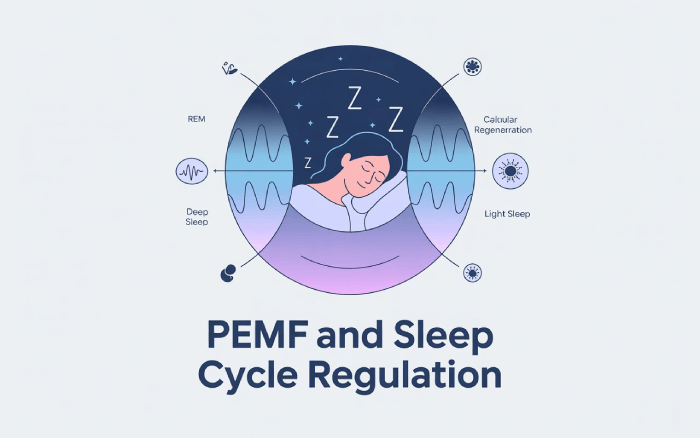
Sleep problems affect millions of people worldwide, with many turning to medications that come with unwanted side effects. But what if there was a natural, non-invasive approach that could help regulate your sleep-wake cycle at the cellular level? PEMF (Pulsed Electromagnetic Field) therapy is emerging as a promising solution for sleep disorders, backed by clinical research and increasingly recognized for its ability to reset disrupted circadian rhythms.
This comprehensive guide explores how PEMF therapy works to improve sleep quality, the specific frequencies that matter, and practical protocols for different sleep challenges. Whether you’re dealing with insomnia, shift work sleep disorder, or sleep disruption from modern lifestyle factors, you’ll find evidence-based strategies to help restore your natural sleep patterns.
How PEMF Therapy Regulates Sleep-Wake Cycles
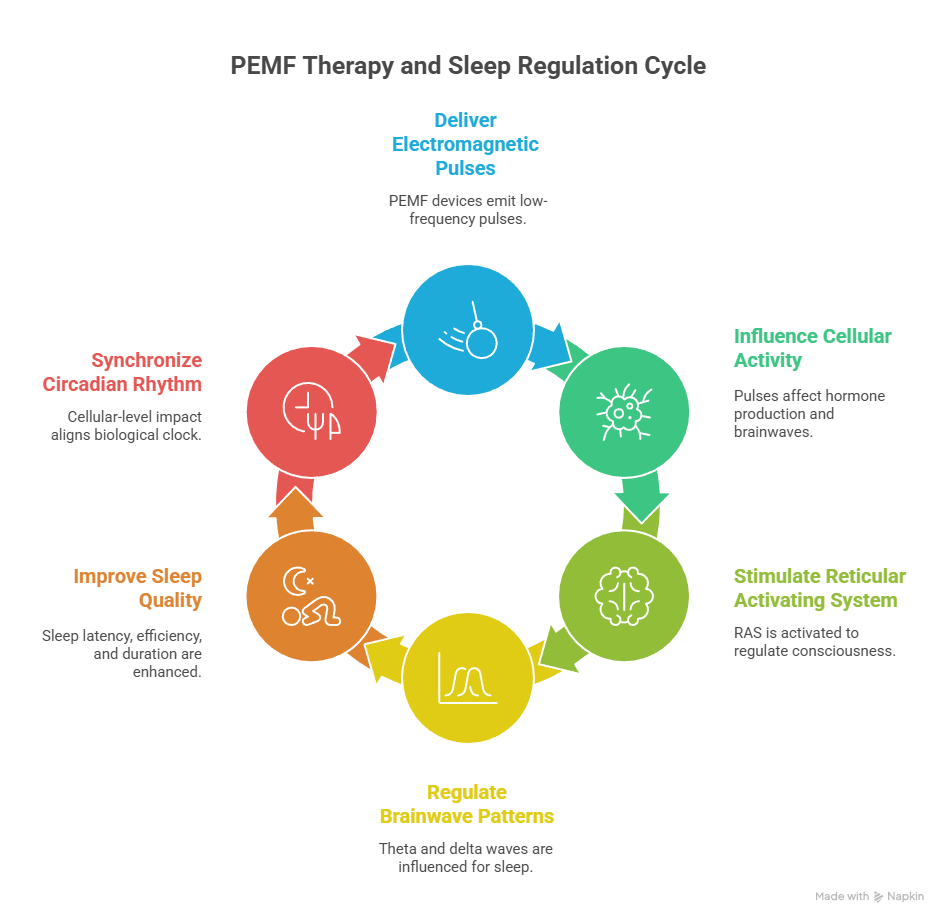
PEMF therapy works by delivering low-frequency electromagnetic pulses to your body’s cells, influencing the electrical activity that governs everything from hormone production to brainwave patterns. Unlike sleep medications that force your body into unconsciousness, PEMF creates the conditions your body needs to sleep naturally.
The science centers on the reticular activating system (RAS), a network of neurons at the base of your brain that controls consciousness and wakefulness. When you stimulate the RAS with specific low-frequency electromagnetic fields, particularly in the theta (4-8 Hz) and delta (0.5-4 Hz) ranges, you help regulate your brain’s awareness levels and sleep depth.
Clinical research demonstrates impressive results. In a 2023 randomized, double-blind trial involving over 150 adults with insomnia, participants using a 1 Hz PEMF device for just four weeks saw a 69.7% response rate in sleep improvement, compared to only 35.1% in the placebo group. These participants experienced measurable improvements in sleep latency (how quickly they fell asleep), sleep efficiency, and total hours slept.
PEMF therapy also influences your circadian rhythm by affecting the electrical charge within your cells. This cellular-level impact helps synchronize your internal biological clock with natural day-night cycles, making it easier to fall asleep at appropriate times and wake feeling refreshed.
The Role of Melatonin and HGH in PEMF Sleep Enhancement
Two critical hormones regulate your sleep quality: melatonin and Human Growth Hormone (HGH). PEMF therapy has been shown to enhance the production and timing of both.
Melatonin, often called the “sleep hormone,” is produced by your pineal gland in response to darkness. It signals to your body that it’s time to sleep, with levels typically rising in the evening and decreasing in the morning. PEMF therapy stimulates the pineal gland through electromagnetic resonance, helping ensure melatonin is released at the appropriate times. This is particularly valuable for people whose natural melatonin production has been disrupted by factors like late-night screen exposure, irregular work schedules, or age-related decline.
Research shows that PEMF therapy can increase melatonin secretion, leading to improved sleep quality, reduced sleep disturbances, and higher daytime energy levels. By harmonizing your body’s natural rhythms rather than artificially introducing synthetic hormones, PEMF offers a more sustainable approach to sleep regulation.
HGH is equally important but often overlooked in sleep discussions. This hormone is fundamental for growth, tissue repair, and overall recovery, with its release particularly significant during deep sleep stages. PEMF therapy creates the conditions for deeper, more restorative sleep, which in turn optimizes the natural release of HGH. This creates a positive feedback loop: better sleep promotes HGH release, which enhances the body’s recovery mechanisms, leading to even better sleep quality over time.
Clinical trials have shown that PEMF therapy not only boosts melatonin production but also balances neurotransmitters and reduces cortisol levels (the stress hormone that can inhibit both melatonin and HGH production). This hormonal rebalancing is one of the key reasons PEMF therapy delivers sustainable improvements rather than temporary relief.
The PEMF Frequency Guide: Matching Hz to Your Sleep Problem
Not all PEMF frequencies are created equal when it comes to sleep. Understanding which frequencies to use for your specific situation can dramatically improve your results.
Delta Frequencies (0.5-4 Hz): Deep Sleep and Restoration
Delta waves are the slowest brainwaves, associated with deep, dreamless sleep and physical restoration. Using PEMF at 3 Hz is particularly effective for promoting the deepest stages of sleep. This frequency mimics your brain’s natural pattern during restorative sleep, encouraging brainwave entrainment (when your brain synchronizes with the external frequency stimulus). Use delta frequencies throughout the night for maximum regenerative sleep.
Theta Frequencies (4-8 Hz): Pre-Sleep Wind Down
Theta waves are associated with light sleep, deep relaxation, and meditation. These higher frequencies work well for easing into sleep by calming your mind and reducing pre-bed anxiety. Many people use 8 Hz (close to the Schumann Resonance, Earth’s natural electromagnetic frequency) in the hour before bed to create a natural transition from wakefulness to sleep. This helps “set the stage” before switching to delta frequencies for overnight use.
10 Hz: Circadian Rhythm Reset
Research dating back to the 1960s shows that weak 10 Hz electromagnetic fields are particularly effective at restoring disturbed circadian rhythms. German researchers found that people deprived of natural environmental cues (including Earth’s magnetic field) developed disrupted circadian rhythms, which were best reversed using 10 Hz square-wave fields. Use 10 Hz PEMF in the evening before bedtime to help restore your body’s internal clock, particularly if you’re dealing with jet lag, shift work, or irregular sleep schedules.
16 Hz: Vagus Nerve Stimulation for Anxiety
A 2025 study involving 485 participants found that 16 Hz was the most effective frequency for PEMF vagus nerve stimulation through neck application. This frequency significantly improved both sleep quality and anxiety reduction by modulating the autonomic nervous system. If anxiety or stress is your primary sleep barrier, consider using 16 Hz applied to the neck area before bed.
Important Note on Frequency Consistency:
While some devices offer ramping frequencies (cycling through different Hz levels), experienced practitioners and researchers recommend sticking with a single, consistent frequency throughout the night. When frequencies change, so do PEMF intensities, which can create unpredictability in results. The brain responds best when allowed to fully entrain to one steady frequency without being pulled in different directions.
PEMF for Shift Work Sleep Disorder: A Specialized Protocol
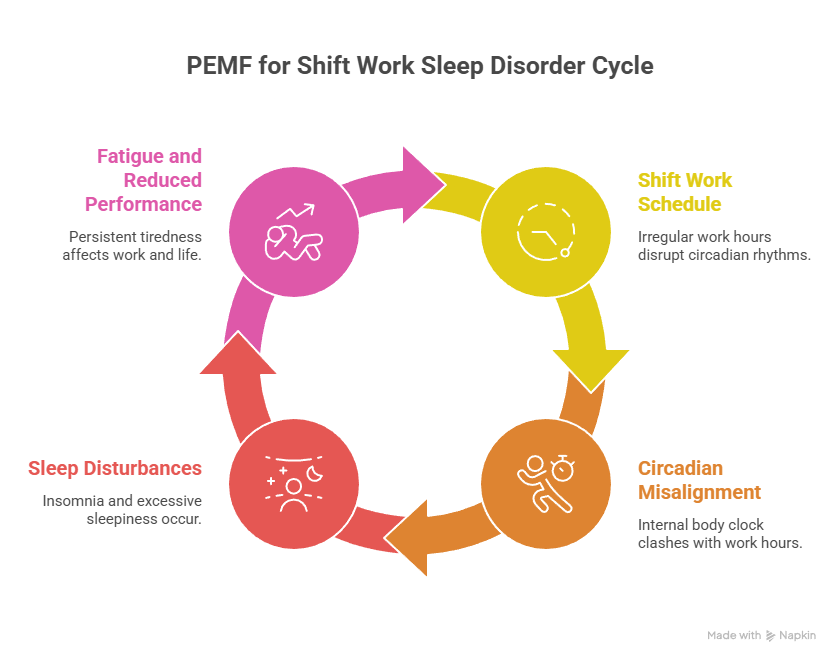
Shift work sleep disorder (SWSD) affects 10-40% of people who work nontraditional hours, yet it’s dramatically underserved in current PEMF content. If you work night shifts, early mornings, or rotating schedules, your challenges are unique—and so should be your approach.
SWSD occurs because shift work schedules go against your internal circadian rhythms. Night shift workers, for example, must sleep during daylight when their body’s signals to wake up are strongest, and stay awake at night when melatonin production naturally peaks. This circadian misalignment leads to insomnia, excessive sleepiness while working, and persistent fatigue even on days off.
PEMF Protocol for Shift Workers:
For Night Shift Workers: Use 10 Hz PEMF for 20-30 minutes immediately after your shift ends to help signal your body that it’s time to wind down, despite the daylight. Follow this with a dark, cool sleep environment and consider blackout curtains. Before your next shift begins, use 8 Hz theta frequencies for 15 minutes to promote gentle wakefulness without the jittery effect of caffeine.
For Rotating Shifts: Focus on the 10 Hz circadian reset frequency during your transition days. Use it in the evening before your new shift pattern begins, helping your body adjust to the upcoming schedule change. Consistency is crucial—try to use PEMF at the same relative time point in your new schedule each day.
For Early Morning Shifts: If you need to wake at 3-4 AM, use delta frequencies (3 Hz) during your shortened sleep window to maximize sleep quality rather than quantity. Upon waking, use 10 Hz for 10 minutes to help your brain transition more smoothly to wakefulness.
Research shows that approximately 30% of shift workers develop SWSD, but many suffer in silence. PEMF therapy offers a non-pharmacological approach to re-aligning your circadian propensity for sleep and wakefulness with your work schedule, without the side effects of prescription sleep aids or stimulants.
Digital Age Sleep Problems: Screen Time and Irregular Schedules
Modern lifestyle factors create unique sleep challenges that our ancestors never faced. Late-night computer work, smartphone scrolling before bed, and irregular schedules driven by our “always-on” culture disrupt sleep in ways that traditional solutions don’t address.
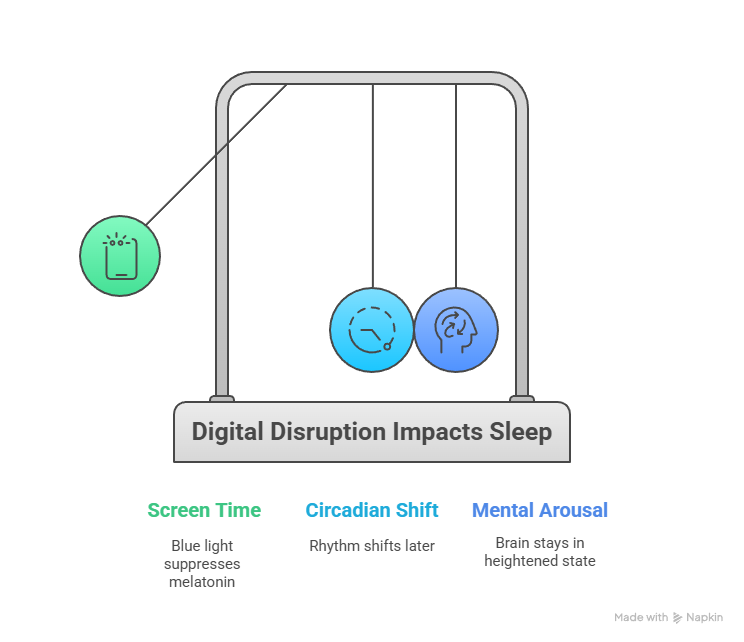
Blue light from screens suppresses melatonin production by tricking your brain into thinking it’s still daytime. This shifts your circadian rhythm later, making it harder to fall asleep at a reasonable hour. Even more problematic, the mental stimulation from social media, emails, or streaming content keeps your brain in a heightened state of arousal that’s incompatible with sleep.
PEMF therapy offers a way to counteract this digital disruption. By directly stimulating your pineal gland (which governs melatonin production), PEMF can help reset your sleep-wake cycle even when it’s been thrown off by screen exposure. The electromagnetic fields work at a cellular level to restore the electrical balance that blue light and irregular schedules disturb.
Practical Protocol for Digital-Disrupted Sleep:
Create a digital sunset routine: Stop screen use 90 minutes before bed. During this window, use 8 Hz PEMF for 20-30 minutes to begin your wind-down process. This helps counteract any residual effects from earlier screen exposure. The theta frequency promotes relaxation while signaling to your brain that the day is ending, regardless of what your screens told it.
If complete screen avoidance isn’t realistic (many people need to work late or have evening responsibilities), position your PEMF device near your workspace in the final hour before bed. The electromagnetic fields can partially offset the circadian disruption happening in real-time.
For people with highly irregular schedules—remote workers with inconsistent routines, parents with unpredictable sleep opportunities, or students with varying class schedules—PEMF’s ability to strengthen your circadian rhythm’s underlying stability becomes especially valuable. Even when your sleep timing varies day to day, PEMF helps maintain the biological mechanisms that govern quality sleep.
Combining PEMF with Other Sleep Therapies
PEMF therapy works well on its own, but its effects can be amplified when combined with complementary approaches. Here are evidence-based combinations that maximize sleep improvement:
PEMF + Red Light Therapy:
Red and near-infrared light therapy (660-850 nm wavelengths) supports mitochondrial function and melatonin production through different mechanisms than PEMF. Using red light therapy in the evening (20-30 minutes) followed by PEMF creates a powerful one-two punch for sleep preparation. The red light helps reduce inflammation and supports cellular energy production, while PEMF directly influences brainwave patterns and hormone release.
PEMF + Melatonin Supplementation:
For people with severely disrupted circadian rhythms, combining low-dose melatonin (0.5-3 mg) with PEMF therapy can accelerate circadian re-alignment. Take the melatonin 60-90 minutes before your target bedtime, and use your PEMF device during this window. The supplement provides an immediate signal while PEMF helps restore your body’s natural production capacity. Over time, you may be able to reduce or eliminate supplementation as your endogenous melatonin production normalizes.
PEMF + Magnesium:
Magnesium deficiency is remarkably common and significantly impacts sleep quality. Magnesium glycinate or threonate (300-400 mg) taken 30-60 minutes before bed, combined with PEMF therapy, addresses both nutritional and electromagnetic factors in sleep regulation. Magnesium supports GABA activity (your brain’s calming neurotransmitter) while PEMF optimizes the neural activity patterns needed for sleep onset.
PEMF + Cognitive Behavioral Therapy for Insomnia (CBT-I):
CBT-I is considered the gold standard psychological treatment for insomnia, focusing on changing thoughts and behaviors around sleep. When combined with PEMF, you get both the cognitive restructuring of CBT-I and the physiological regulation of PEMF. Many practitioners find that PEMF makes CBT-I techniques more effective by creating the physical conditions (proper hormone levels, balanced brainwaves) that allow behavioral changes to take hold more easily.
PEMF + Sleep Hygiene Optimization:
Even the best PEMF protocol won’t overcome terrible sleep hygiene. Combine your PEMF use with foundational practices: keep your bedroom cool (65-68°F), completely dark, and quiet; maintain consistent sleep and wake times (even on weekends); avoid caffeine after 2 PM; and create a relaxing pre-bed routine. PEMF enhances what good sleep hygiene starts.
Device Placement and Practical Application Tips
Where and how you use your PEMF device significantly impacts results. Here’s what actually works based on research and practitioner experience:
Targeting the Reticular Activating System (RAS):
For maximum sleep benefit, you want electromagnetic fields to reach the RAS—the part of your brainstem behind the upper neck that controls wakefulness and sleep. The most effective placement is typically at the sides of your head just above the ears (stimulating the parietal lobes) or at the base of your skull/upper neck.
Full-Body Mats vs. Localized Applicators:
Full-body PEMF mats provide whole-system benefits, promoting overall relaxation and muscle recovery alongside sleep improvement. They’re ideal if you also deal with pain or inflammation that disrupts sleep. However, they’re often too firm to sleep on directly—place a cushion or padded layer between you and the mat for comfort.
Localized applicators (pillow pads, coils, or neck-specific devices) offer more targeted delivery to the brain areas governing sleep. Many people find these more practical for overnight use since they’re less obtrusive and can be positioned precisely to target the RAS.
Timing and Duration:
Pre-bed use: 20-30 minutes before sleep with theta frequencies (8 Hz) to wind down. Overnight use: Continuous or cyclical (20 minutes on/100 minutes off) with delta frequencies (3 Hz) for deep sleep maintenance. Morning use (if needed): 10 minutes with 10 Hz to support gentle awakening without grogginess.
Heat Settings:
Many modern PEMF mats integrate heat, which can enhance relaxation but may be counterproductive for sleep if set too high. Your core body temperature needs to drop slightly for optimal sleep onset. If using heat, keep it low (30-40°C/86-104°F) or turn it off after the initial wind-down period.
EMF Safety Considerations:
Quality PEMF devices emit very low EMF radiation levels (typically below 0.2 mG at safe distances), far below concerning thresholds. They should include timer features, fail-safes, and low-voltage operation. Always choose FDA-cleared devices from reputable manufacturers and check safety certifications.
When PEMF Might Not Work: Troubleshooting Common Issues
PEMF therapy helps most people, but it’s not a universal solution. Here’s how to troubleshoot if you’re not seeing results:
Issue: No improvement after 2-3 weeks
Check your frequency settings. Many people use frequencies that are too high or inconsistent. Stick with delta (3 Hz) for overnight use and ensure your device maintains a steady frequency rather than ramping. Also verify device placement—electromagnetic fields need to reach your brain/neck area, not just general body regions.
Issue: Initial improvement but effects plateaued
Your body may have adapted to your current protocol. Try adjusting timing (move from pre-bed only to overnight use) or experiment with the 10 Hz circadian reset frequency if you’ve only been using delta. Some people benefit from “cycling” their use—5 days on, 2 days off.
Issue: Feel more awake or “wired” after PEMF
You may be using frequencies that are too high or intensities that are too strong. Higher theta frequencies (7-8 Hz) can sometimes be too stimulating right before bed. Try lower delta frequencies (2-3 Hz) instead. Also ensure you’re not using your device during high-cortisol times (early evening) when it might work against your natural wind-down process.
Issue: Sleep quality improved but still waking frequently
PEMF may be helping sleep onset but not addressing factors causing night wakings. Screen for underlying conditions like sleep apnea (particularly if you snore), restless leg syndrome, or pain conditions. Consider combining PEMF with targeted approaches for these specific issues.
Issue: Works sporadically—some nights great, some nights no effect
Inconsistency often indicates timing or environmental factors are overriding PEMF benefits. Are you using it at the same time each night? Is your sleep environment optimized (dark, cool, quiet)? Are you maintaining consistent sleep-wake times? PEMF works best as part of a comprehensive approach, not as a standalone solution fighting against poor sleep habits.
Contraindications to Remember:
PEMF therapy is not appropriate for everyone. Avoid use if you have a pacemaker or other implanted electronic device, are pregnant (insufficient research on safety), have epilepsy (electromagnetic stimulation could trigger seizures), or have active bleeding or acute injuries. Always consult your healthcare provider before starting PEMF therapy, particularly if you have any medical conditions or take medications.
Sleep Disorders Beyond Insomnia: Specific PEMF Applications
Most PEMF content focuses solely on insomnia, but the therapy shows promise for several other sleep disorders that affect millions of people:
Restless Leg Syndrome (RLS):
RLS causes uncomfortable sensations in the legs and an irresistible urge to move them, typically worsening at night. PEMF therapy can help by reducing nerve activity and muscle discomfort. Use a full-body mat or leg-specific applicator with 3-10 Hz frequencies for 20-30 minutes before bed. Some people find continued use throughout the night helpful. The electromagnetic fields appear to calm the overactive neural pathways responsible for RLS symptoms.
Sleep Apnea Support:
While PEMF cannot cure obstructive sleep apnea (OSA), it may offer supportive benefits by improving oxygenation and relaxing airway muscles for better breathing during sleep. Use with caution and only as an adjunct to primary treatment (CPAP, dental devices, or surgery). Some research suggests PEMF may help with central sleep apnea by supporting better neural regulation of breathing patterns, but more studies are needed.
Jet Lag and Travel-Related Disruption:
PEMF’s ability to reset circadian rhythms makes it particularly valuable for travelers. When crossing time zones, use 10 Hz frequency at your destination’s evening time (even if your body thinks it’s afternoon) to begin shifting your internal clock. Continue for 3-5 days until adjustment is complete. A portable PEMF device can be invaluable for frequent travelers.
Parasomnias (Nightmares, Sleep Talking, Sleepwalking):
Some evidence suggests PEMF therapy can reduce the frequency and intensity of parasomnias by promoting more stable, consolidated sleep architecture. Delta frequencies (3 Hz) throughout the night appear most helpful, possibly by preventing the fragmented sleep transitions that often trigger parasomnia events.
Periodic Limb Movement Disorder:
Similar to RLS but involving involuntary movements during sleep, this condition may respond to PEMF’s ability to calm excessive neural activity. Use similar protocols as recommended for RLS.
Conclusion: Building Your PEMF Sleep Protocol
PEMF therapy offers a scientifically-supported, non-pharmacological approach to improving sleep quality and regulating circadian rhythms. Unlike sleep medications that force unconsciousness, PEMF works with your body’s natural systems to create the conditions for restorative sleep.
The key to success lies in matching the right frequency to your specific sleep challenge, using proper device placement, and maintaining consistency. Whether you’re dealing with standard insomnia, shift work sleep disorder, or modern lifestyle disruptions like screen time and irregular schedules, there’s a PEMF protocol that can help.
Start with the basics: delta frequencies (3 Hz) for deep sleep, proper device placement targeting your brain/neck area, and nightly use for at least 4-6 weeks to see full benefits. From there, you can refine your approach based on results, potentially adding complementary therapies like red light, magnesium supplementation, or improved sleep hygiene practices.
Remember that PEMF is most effective as part of a comprehensive approach to sleep health. It’s not a magic solution that allows you to ignore sleep fundamentals, but rather a powerful tool that amplifies the benefits of good sleep practices while addressing the electromagnetic and cellular aspects of sleep regulation that other approaches miss.
For those who have struggled with sleep for months or years, often cycling through various medications and remedies with limited success, PEMF therapy represents a fundamentally different approach—one that works at the cellular level to restore the body’s natural capacity for healthy sleep rather than artificially inducing it. And for many, that difference makes all the difference.