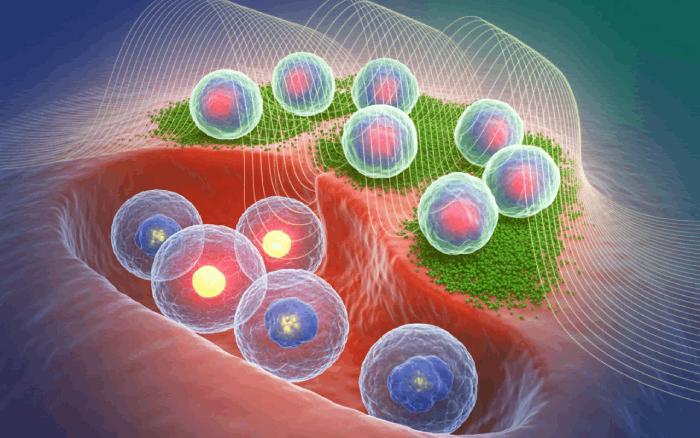
Understanding How Cellular Mechanisms Transform Into Healing Outcomes
If you’ve researched PEMF (Pulsed Electromagnetic Field) therapy, you’ve probably encountered a frustrating disconnect. Scientific papers discuss ATP production, calcium channels, and mitochondrial density. Meanwhile, PEMF device manufacturers talk about frequencies, intensities, and gauss levels. And you? You just want to know which settings to use for your knee pain, how long each session should last, and when you can expect results.
This gap between cellular biology and clinical practice isn’t your fault—it’s a structural problem in how PEMF information is presented. The science exists in one silo, the device specifications in another, and practical protocols in yet another. Rarely do these three worlds connect in a way that actually helps you make informed decisions.
This article bridges that gap. We’ll start with what happens inside your cells when exposed to PEMF, translate those mechanisms into therapeutic effects you can feel, connect those effects to specific device parameters, and finally give you practical protocols you can implement. By the end, you’ll understand not just what to do, but why it works at every level from molecular to clinical.
The Cellular Foundation – What Really Happens Inside Your Cells
Your Cells Run on Electricity (And Most Are Running Low)
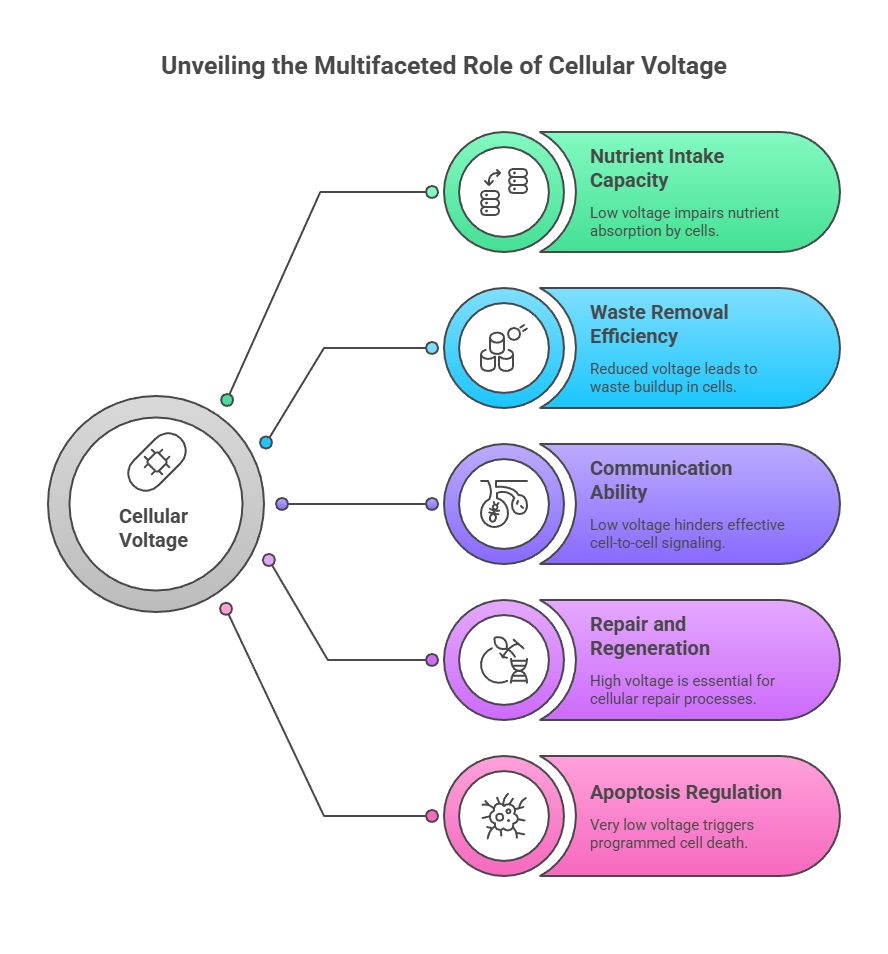
Every cell in your body maintains an electrical charge across its membrane, called the membrane potential. Think of it like a battery. Healthy cells maintain a voltage of -70 to -90 millivolts (mV). When cells are injured, inflamed, or degenerating, this voltage drops—sometimes to as low as -20 to -30 mV.
This isn’t just an interesting biophysical fact. Your cellular voltage directly determines:
- Nutrient intake capacity – Low voltage means cells can’t effectively pull in nutrients
- Waste removal efficiency – Depleted cells accumulate metabolic waste
- Communication ability – Cells with low voltage can’t signal effectively to neighbors
- Repair and regeneration – Healing processes require high-voltage cells
- Apoptosis regulation – Very low voltage triggers programmed cell death
This discovery came from groundbreaking research in the 1950s when scientists found that amputated frog legs could regenerate when electrical current was applied. The voltage difference across cell membranes proved to be a key driver of tissue regeneration. When cells maintain optimal voltage, they can heal. When voltage drops, healing stalls.
The PEMF Effect: Recharging Cellular Batteries
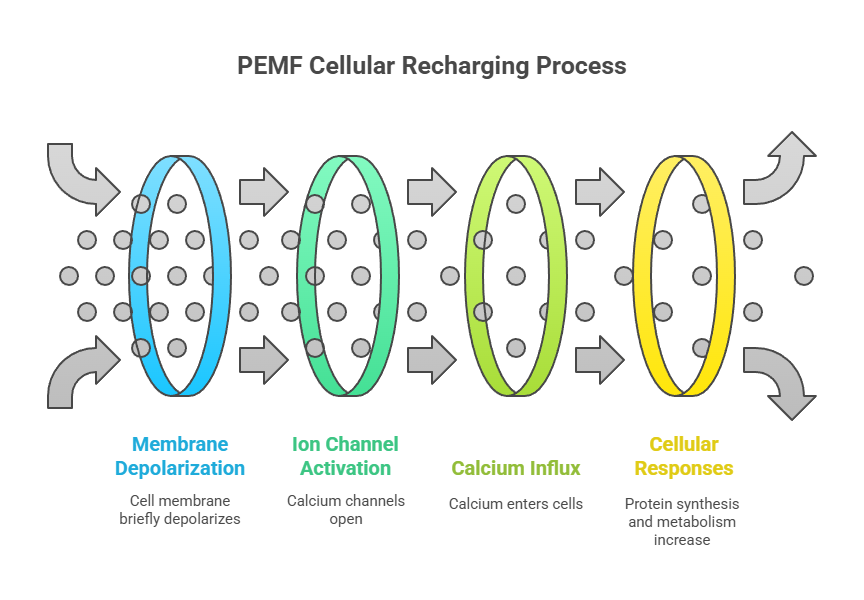
PEMF works by inducing electrical currents in your tissues through electromagnetic induction—the same principle that powers electrical transformers. When a pulsed magnetic field passes through your body, it creates tiny electrical currents in your cells. These induced currents help restore optimal membrane potential, essentially “recharging” depleted cells.
But PEMF does far more than just voltage restoration. Here’s the cascade of events that follows:
Step 1: Membrane Depolarization and Ion Channel Activation
The induced electrical current causes a brief depolarization of the cell membrane, which activates voltage-gated ion channels—particularly calcium channels (VGCCs). These channels are like gates that control the flow of electrically charged minerals (ions) in and out of cells.
Calcium influx is especially important because calcium acts as a cellular messenger. When calcium enters a cell, it triggers a cascade of beneficial responses including increased protein synthesis, enhanced cellular metabolism, and activation of repair pathways.
Step 2: ATP Production Surge
One of the most powerful effects of PEMF is on your cellular powerhouses: mitochondria. Studies have shown that PEMF exposure can increase ATP (adenosine triphosphate) production by 300-400%. ATP is the energy currency of your cells—it powers virtually every cellular process from muscle contraction to DNA repair.
The landmark 2003 NASA study by Dr. Thomas Goodwin demonstrated this dramatically. Cells exposed to square-wave PEMF showed not only increased ATP production but also a 300-400% increase in mitochondrial density. More mitochondria means more energy-generating capacity, which translates to faster healing and better cellular function.
Step 3: Nitric Oxide Release
PEMF stimulates the production of nitric oxide (NO), a signaling molecule with multiple therapeutic effects:
- Vasodilation – NO relaxes and widens blood vessels, improving circulation
- Enhanced oxygen delivery – Better blood flow means more oxygen reaches tissues
- Nutrient transport – Improved circulation delivers healing nutrients to injured areas
- Immune function – NO helps immune cells destroy pathogens
- Neurotransmission – In the brain, NO influences cognition and memory
Step 4: Gene Expression Changes
Perhaps the most profound effect of PEMF is its impact on gene expression. The NASA study found that PEMF upregulated over 160 genes associated with growth and regeneration. This included genes for:
- Collagen production (essential for tissue repair)
- Growth factors (signals that promote healing)
- Anti-inflammatory proteins
- Antioxidant enzymes (cellular protection)
- Stem cell differentiation factors
Critically, PEMF also increased neural stem cell production by 400%. This has enormous implications for brain health, nerve regeneration, and neurological conditions.
Step 5: Anti-Inflammatory Pathway Activation
Both ATP and nitric oxide act as signaling molecules that trigger anti-inflammatory pathways. PEMF has been shown to:
- Decrease pro-inflammatory cytokines (IL-1β, IL-6, IL-17A, TNF-α)
- Increase anti-inflammatory cytokines (IL-3, IL-4, IL-10)
- Modulate macrophage polarization (shifting from inflammatory M1 to healing M2)
- Activate the Nrf2 pathway (increases cellular antioxidants and heat shock proteins)
- Inhibit NF-κB (a master regulator of inflammation)
Step 6: Improved Circulation and Oxygenation
PEMF has a measurable effect on blood flow and red blood cell function. Studies using live blood analysis have shown that a single 20-minute PEMF session can:
- Separate clumped red blood cells (rouleaux formation)
- Increase blood vessel diameter by 8-9%
- Improve oxygen-carrying capacity of blood
- Enhance white blood cell motility and count
- Facilitate waste removal through improved lymphatic flow
When red blood cells clump together, they can’t flow efficiently through small capillaries, limiting oxygen delivery to tissues. PEMF restores the negative charge on red blood cells, causing them to repel each other and flow freely—dramatically improving microcirculation.
The Translation Layer – How Cellular Effects Become Therapeutic Outcomes
Now that you understand the cellular mechanisms, let’s translate them into the therapeutic effects you actually experience. This is where the science becomes practical.
Pain Relief: The Multi-Pathway Approach
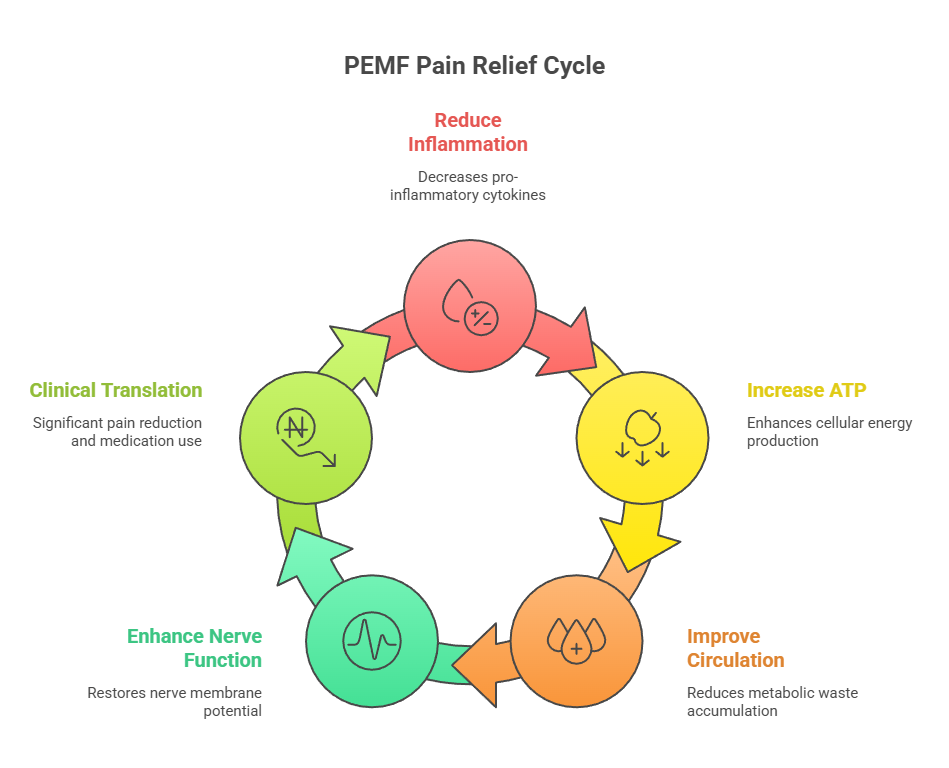
Cellular mechanism: Reduced inflammation (decreased pro-inflammatory cytokines), increased ATP (better cellular function), improved circulation (reduced metabolic waste accumulation), enhanced nerve function (restored membrane potential).
Clinical translation: Within 2-4 weeks of regular PEMF use, most people experience significant pain reduction. A randomized controlled trial with 120 patients found PEMF reduced pain by 36% compared to just 10% in the standard-of-care group. Even more impressive, patients reduced pain medication use by 55%.
Why it works: PEMF doesn’t just mask pain—it addresses multiple pain mechanisms simultaneously. It reduces inflammatory pain by decreasing cytokines, improves ischemic pain by increasing blood flow, relieves neuropathic pain by restoring nerve function, and reduces muscle pain by improving cellular energy.
Inflammation Reduction: Targeting the Root Cause
Cellular mechanism: Activation of A2A adenosine receptors, decreased NF-κB signaling, shift from M1 to M2 macrophages, increased IL-10 production.
Clinical translation: Conditions driven by chronic inflammation—arthritis, inflammatory bowel disease, asthma, autoimmune conditions—show marked improvement. Studies using 15-gauss PEMF at 75 Hz showed significant inhibition of inflammatory pathways within weeks of treatment.
Why it works: Inflammation is orchestrated by chemical messengers called cytokines. PEMF shifts the balance from pro-inflammatory to anti-inflammatory cytokines, directly addressing the chemical environment that perpetuates inflammation.
Enhanced Healing and Regeneration: Accelerating Recovery
Cellular mechanism: Increased ATP (energy for repair), upregulation of growth factors (BMP-2, BMP-4), enhanced stem cell activity, increased collagen production, improved angiogenesis (new blood vessel formation).
Clinical translation: Fractures heal faster, post-surgical recovery improves, wounds close more quickly, and tissue regeneration accelerates. PEMF received FDA approval in 1979 specifically for non-union fractures because of its proven ability to stimulate bone healing.
Why it works: Healing requires enormous energy (ATP), building materials (proteins), signaling molecules (growth factors), and delivery systems (blood vessels). PEMF enhances all of these simultaneously, creating an optimal environment for regeneration.
Improved Sleep: Brainwave Entrainment
Cellular mechanism: Brainwave frequency entrainment, enhanced melatonin production, balanced autonomic nervous system (shift to parasympathetic), reduced cortisol.
Clinical translation: A 4-week German study found that 70% of insomnia patients experienced complete relief, 24% showed clear improvement. Sleep latency decreased, nighttime awakenings reduced, and daytime symptoms improved.
Why it works: Different PEMF frequencies can influence brainwave patterns. Delta frequencies (1-4 Hz) promote deep sleep, theta frequencies (4-8 Hz) facilitate the transition to sleep, and alpha frequencies (8-12 Hz) promote relaxation. By matching PEMF frequency to desired brainwave state, you can guide your brain toward sleep.
Increased Energy: Cellular Power Amplification
Cellular mechanism: 300-400% increase in ATP production, enhanced mitochondrial density, improved electron transport chain function, better oxygen utilization.
Clinical translation: Users consistently report feeling more energized, experiencing less fatigue, having better mental clarity, and showing improved physical endurance. This often appears within the first week of regular use.
Why it works: Energy isn’t just a feeling—it’s a biological reality determined by ATP availability. When every cell in your body has more energy to work with, everything functions better: muscles contract more efficiently, nerves fire more reliably, immune cells respond more robustly, and healing processes accelerate.
Enhanced Circulation: The Foundation of Health
Cellular mechanism: Nitric oxide-mediated vasodilation, separated red blood cells (improved rheology), increased capillary density, enhanced endothelial function.
Clinical translation: Better nutrient delivery to all tissues, improved waste removal, enhanced immune surveillance, accelerated healing, better cognitive function, improved exercise performance.
Why it works: Circulation is the delivery system for everything your body needs and the removal system for everything it doesn’t. When PEMF improves circulation by even 8-9%, the compound effects across all body systems are significant.
Device Parameters Decoded – Matching Settings to Mechanisms
Now we connect cellular mechanisms and therapeutic outcomes to the settings on your PEMF device. This is where many people get lost, but understanding these parameters is key to optimizing your results.
Intensity (Measured in Gauss or Tesla)
What it means: Intensity is the strength of the magnetic field. Think of it like water pressure—higher intensity means more force, but not necessarily better results.
Optimal range: Research analyzing 92 studies from 1999-2019 concluded that intensities between 1-100 Gauss (0.1-10 mT) are most effective for cellular response. This is exactly the range used in quality PEMF devices.
How to choose:
- Low intensity (1-20 Gauss): Best for sensitive individuals, nervous system conditions, brain/nerve applications, maintenance therapy
- Medium intensity (20-60 Gauss): Ideal for most conditions, daily use, general wellness, chronic pain
- High intensity (60-100 Gauss): Useful for acute injuries, deep tissue penetration, stubborn conditions, athletes
Clinical translation: Start low and increase gradually. More intensity doesn’t always mean faster results. The goal is cellular stimulation, not overstimulation.
Frequency (Measured in Hertz)
What it means: Frequency is how many electromagnetic pulses occur per second. Different frequencies affect different biological processes and can influence brainwave patterns.
Frequency ranges and effects:
- Delta (1-4 Hz): Deep sleep, pain relief, deep tissue healing, parasympathetic activation. Use at night for restorative sleep and deep cellular repair.
- Theta (4-8 Hz): Meditation, light sleep transition, anxiety reduction, creativity enhancement. Use in evening for relaxation or anytime for stress relief.
- Alpha (8-12 Hz): Relaxed alertness, creative flow, reduced anxiety, pre-sleep preparation. Use in evening or for meditation practices.
- Beta (12-30 Hz): Alert focus, mental clarity, energy boost, cognitive performance. Use in morning or when you need concentration.
- Gamma (30-100 Hz): High-level processing, intense focus, advanced cognitive function. Use for demanding mental tasks.
Clinical translation: Match frequency to time of day and desired outcome. Use energizing beta frequencies in the morning, calming alpha or theta in the evening, and delta at night. For specific conditions, research suggests:
- Bone healing: 10-30 Hz
- Pain relief: 5-30 Hz
- Inflammation: 5-15 Hz
- Nerve regeneration: 10-100 Hz
- General wellness: 7.83 Hz (Schumann resonance)
Waveform and Slew Rate
What it means: Waveform is the shape of the electromagnetic pulse. Slew rate is how quickly the magnetic field changes—this is actually the most important factor for cellular stimulation.
Why it matters: The NASA study definitively proved that square waves with fast rise times (high slew rate) are significantly more effective than sine or triangle waves. Square waves produced 400% more stem cell growth and 300-400% more mitochondrial density.
The science: According to Faraday’s law, the induced electrical current is proportional to the rate of change of the magnetic field. A fast-changing square wave induces much more cellular current than a slow-changing sine wave.
Clinical translation: Choose devices that use square or rectangular waveforms with fast rise times. This isn’t just marketing—it’s fundamental physics that determines how much energy actually reaches your cells.
Polarity (Unipolar vs Bipolar)
What it means: Polarity refers to whether the magnetic field pulses in one direction (unipolar/monophasic) or alternates direction (bipolar/biphasic).
Unipolar (North or South only):
- Provides consistent directional stimulation
- Useful for targeted, short-term applications
- Risk of cellular adaptation with prolonged use
- Can cause galvanic effects near metal implants
Bipolar (Alternating):
- Net zero charge over time (balanced stimulation)
- Prevents cellular adaptation
- Safe for long-term, regular use
- Minimizes effects on metal implants
- Mimics natural tissue “exercise” (contract/relax)
Clinical translation: For daily wellness sessions and chronic conditions, bipolar is generally preferred. For acute, targeted treatment, unipolar can be useful. Many quality devices offer both options.
Session Duration and Frequency
What research shows: The 92-study meta-analysis found that repeated applications over more than 10 days show higher effectiveness than shorter periods. However, acute exposure over 24 hours straight is less effective than shorter, repeated sessions.
Optimal protocols:
- Acute conditions: 20-30 minutes, 2-3 times daily for 2-4 weeks
- Chronic conditions: 30-60 minutes, 1-2 times daily for 8-12 weeks
- General wellness: 20-30 minutes daily for maintenance
- Athletic recovery: 15-20 minutes post-workout
- Sleep improvement: 20-30 minutes before bed at delta frequencies
Why timing matters: Cells need time to respond to PEMF stimulation. The beneficial effects—ATP production, protein synthesis, gene expression changes—take hours to fully manifest. Spacing sessions allows these processes to complete before the next stimulation.
Clinical Protocols – Practical Application for Specific Conditions
Now we bring everything together into actionable protocols. These recommendations synthesize cellular mechanisms, therapeutic effects, and device parameters into practical treatment plans.
Protocol 1: Acute Pain and Inflammation
Cellular targets: Reduce inflammatory cytokines, increase circulation, restore membrane potential, activate pain-relief pathways
Device settings:
- Intensity: 30-60 Gauss
- Frequency: 10-15 Hz
- Polarity: Bipolar (alternating)
- Duration: 20-30 minutes
- Frequency: 2-3 times daily
- Timeline: 7-14 days for acute conditions
Application method: For localized pain (knee, shoulder, elbow), use a localized applicator directly on the area. For whole-body inflammation, use a full-body mat. Consider “sandwiching” the affected area between a mat and localized applicator for maximum penetration.
Expected timeline:
- Days 1-3: May feel slight warming, improved sleep, subtle pain reduction
- Days 4-7: Noticeable pain decrease, improved mobility, reduced swelling
- Days 8-14: Significant improvement, return of function, reduced medication needs
Protocol 2: Chronic Pain Management
Cellular targets: Restore cellular voltage, increase ATP production, promote tissue regeneration, reset pain signaling
Device settings:
- Intensity: 20-50 Gauss (start low, increase gradually)
- Frequency: 7.83 Hz (Schumann resonance) or 10 Hz
- Polarity: Bipolar (alternating)
- Duration: 30-45 minutes
- Frequency: Once or twice daily
- Timeline: Minimum 8-12 weeks for chronic conditions
Layered approach:
- Full-body mat session to energize whole system (30 minutes)
- Localized applicator on problem area (20 minutes)
- Rest and hydrate post-session
Expected timeline:
- Weeks 1-2: Improved sleep, slight energy increase, variable pain response
- Weeks 3-4: Consistent pain reduction, better mobility, reduced stiffness
- Weeks 5-8: Significant improvement, medication reduction possible
- Weeks 9-12: Stabilization, shift to maintenance protocol
Protocol 3: Injury Recovery and Tissue Healing
Cellular targets: Maximize ATP production, upregulate growth factors, increase stem cell activity, enhance collagen production, improve circulation
Device settings:
- Intensity: 40-80 Gauss
- Frequency: 10-30 Hz for general healing, 15-20 Hz for bone
- Polarity: Bipolar (alternating)
- Duration: 30-45 minutes
- Frequency: 2 times daily (morning and evening)
- Timeline: 4-8 weeks depending on injury severity
Progressive protocol:
- Week 1-2: Focus on inflammation reduction (lower frequency, 10-15 Hz)
- Week 3-4: Shift to tissue regeneration (higher frequency, 20-30 Hz)
- Week 5+: Maintenance and remodeling (moderate frequency, 15-20 Hz)
Expected timeline:
- Phase 1 (Days 1-7): Inflammation reduction, pain decrease
- Phase 2 (Weeks 2-4): Active tissue repair, strength returning
- Phase 3 (Weeks 5-8): Tissue remodeling, return to function
Protocol 4: Sleep Optimization
Cellular targets: Entrain delta brainwaves, activate parasympathetic nervous system, increase melatonin, reduce cortisol
Device settings:
- Intensity: 10-30 Gauss (lower is often better for sleep)
- Frequency: 1-4 Hz (delta) for sleep, 4-8 Hz (theta) for relaxation
- Polarity: Bipolar (alternating)
- Duration: 20-30 minutes before bed
- Frequency: Nightly
- Timeline: Effects often immediate, optimize over 2-4 weeks
Bedtime protocol:
- 30 minutes before bed: Start PEMF session on full-body mat
- First 10 minutes: 8 Hz (theta) to promote relaxation
- Final 10-20 minutes: 2-4 Hz (delta) to induce sleepiness
- Power off and go directly to bed (while still in relaxed state)
Expected timeline:
- Night 1: May feel more relaxed, easier to fall asleep
- Week 1: Sleep latency decreases, fewer awakenings
- Weeks 2-4: Deeper sleep, morning energy improvement, daytime alertness
Protocol 5: Athletic Performance and Recovery
Cellular targets: Accelerate ATP restoration, reduce inflammatory damage, improve circulation, enhance muscle repair
Device settings:
- Intensity: 50-80 Gauss
- Frequency: 10-15 Hz post-workout, 15-30 Hz for active recovery
- Polarity: Bipolar (alternating)
- Duration: 15-20 minutes post-workout, 30 minutes on rest days
- Frequency: Daily, adjusted to training intensity
Training integration:
- Post-workout: 15-20 minute session within 1-2 hours of training
- Rest days: 30-minute full-body session for active recovery
- Pre-competition: Light 10-minute session at beta frequencies for alertness
- Recovery weeks: Increase to 45-60 minute sessions daily
Expected results:
- Reduced muscle soreness (DOMS) by 30-50%
- Faster return to training after hard sessions
- Improved sleep quality and recovery
- Reduced injury risk through better tissue health
- Enhanced performance through better energy systems
Protocol 6: General Wellness and Prevention
Cellular targets: Maintain optimal cellular voltage, support mitochondrial health, prevent inflammatory buildup, optimize all body systems
Device settings:
- Intensity: 20-40 Gauss
- Frequency: 7.83 Hz (Schumann resonance) for balance
- Polarity: Bipolar (alternating)
- Duration: 20-30 minutes
- Frequency: Daily or 5-6 times per week
Time-of-day optimization:
- Morning: 12-20 Hz for 15 minutes to boost energy and alertness
- Evening: 7.83 Hz for 20-30 minutes for balanced wellness
- Night: 2-4 Hz for 20 minutes to promote deep sleep
Wellness benefits:
- Sustained energy levels throughout the day
- Better stress resilience
- Improved sleep architecture
- Enhanced immune function
- Optimal cellular function aging gracefully
Tracking Your Response – From Cellular Changes to Clinical Outcomes
Understanding what’s happening in your body helps you stay motivated and optimize your protocol. Here’s how to track your progress at different levels.
Immediate Indicators (During and Right After Sessions)
What you might feel:
- Gentle warmth or tingling (ion movement and increased circulation)
- Deep relaxation (parasympathetic activation)
- Muscle relaxation (reduced tension, improved blood flow)
- Mental clarity or sleepiness (depending on frequency used)
What’s happening cellularly: Membrane depolarization, ion channel activation, initial ATP surge, nitric oxide release, blood vessel dilation.
Short-Term Changes (Days 1-7)
What you might notice:
- Improved sleep quality or duration
- Slight increase in energy
- Reduced morning stiffness
- Better mood or stress resilience
- Variable pain response (may temporarily increase before decreasing)
What’s happening cellularly: Sustained ATP production increase, inflammatory cytokine reduction beginning, gene expression changes starting, improved circulation establishing.
Medium-Term Changes (Weeks 2-4)
What you might notice:
- Consistent pain reduction (20-40%)
- Improved mobility and flexibility
- Better exercise recovery
- Noticeable energy improvement
- Reduced need for pain medications
What’s happening cellularly: Tissue regeneration actively occurring, new blood vessel formation, stem cell activation and differentiation, significant inflammation reduction, cellular voltage restoration.
Long-Term Changes (Weeks 5-12+)
What you might notice:
- Major pain reduction or resolution (50-80%)
- Return of normal function
- Sustained energy improvement
- Better overall resilience
- Stabilization of improvements
What’s happening cellularly: Tissue remodeling and strengthening, mitochondrial density increase stabilizing, optimal cellular voltage maintained, anti-inflammatory state becoming baseline.
Measurable Biomarkers (If Tracking Formally)
If you want objective measures of progress, consider tracking:
- Blood work: C-reactive protein (inflammation), IL-6 (inflammatory marker), cortisol (stress hormone)
- Live blood analysis: Red blood cell clumping, white blood cell activity, oxygenation levels
- Heart rate variability (HRV): Autonomic nervous system balance
- Sleep tracking: Sleep stages, deep sleep percentage, sleep latency
- Pain scales: Visual analog scale (VAS) or numerical rating scale
- Functional assessments: Range of motion, strength tests, endurance measures
Red Flags and When to Adjust
If you experience any of these, modify your protocol:
- Increased pain or inflammation: Reduce intensity or frequency temporarily (healing crisis possible but rare)
- Excessive fatigue: Shorten session duration or take 1-2 days off
- Insomnia from daytime use: Avoid high-frequency sessions after 6 PM
- Hyperactivity from evening use: Switch to lower frequencies (delta/theta) before bed
- No response after 4 weeks: Increase intensity or frequency, or consult practitioner
Remember: Everyone responds differently based on age, condition severity, overall health status, and consistency of use. Give your protocol at least 4-6 weeks before making major changes.
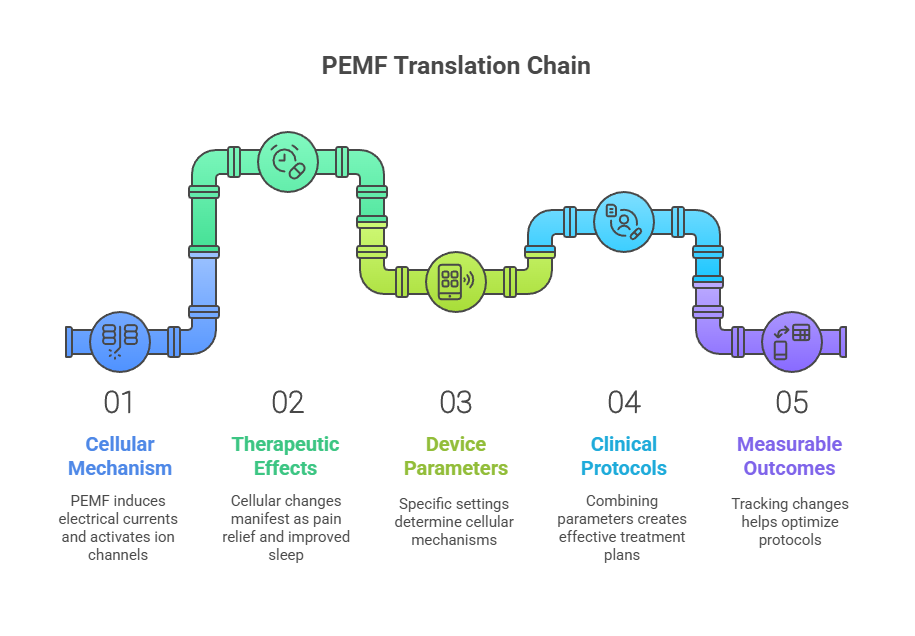
Conclusion: Connecting All the Dots
You now understand the complete PEMF translation chain:
- Cellular mechanism: PEMF induces electrical currents → activates ion channels → increases ATP and nitric oxide → upregulates healing genes → reduces inflammation → restores cellular voltage
- Therapeutic effects: Those cellular changes manifest as pain relief, reduced inflammation, faster healing, better sleep, increased energy, and improved circulation
- Device parameters: Specific settings (intensity, frequency, waveform, polarity) determine which cellular mechanisms are activated and how strongly
- Clinical protocols: Combining the right parameters with proper timing and duration creates effective treatment plans for specific conditions
- Measurable outcomes: Tracking changes at cellular and clinical levels helps optimize protocols and maintain motivation
The key insight is that PEMF isn’t magic—it’s applied physics and biology. Every setting on your device connects to a cellular mechanism, which produces a therapeutic effect, which you experience as clinical improvement. When you understand these connections, you can make informed decisions about your treatment instead of blindly following preset programs.
Your Action Plan
Getting started:
- Identify your primary goal (pain relief, healing, sleep, energy, wellness)
- Choose the appropriate protocol from Part 4
- Start conservatively (lower intensity, standard duration)
- Track your response using indicators from Part 5
- Adjust parameters based on your results after 7-14 days
- Commit to at least 4-6 weeks for chronic conditions
Remember the fundamentals:
- Consistency matters more than intensity
- More isn’t always better—cellular stimulation has an optimal range
- Match frequency to time of day and desired outcome
- Use bipolar polarity for regular, long-term sessions
- Give your body time to respond—healing happens between sessions
PEMF therapy works because it addresses health at the most fundamental level: cellular function. By restoring optimal cellular voltage, increasing energy production, reducing inflammation, and enhancing circulation, PEMF creates the conditions necessary for your body to heal itself. The science is clear, the mechanisms are understood, and the clinical results are proven.
Now you have the knowledge to bridge the gap from cellular biology to clinical practice. You understand not just what to do, but why it works—and that understanding is the foundation for successful, long-term results with PEMF therapy.
Key Research References
Foundational Studies:
- Goodwin TJ, et al. (2003). NASA study on PEMF effects on stem cells and mitochondrial density
- Mansourian M, Shanei A. (2021). Meta-analysis of PEMF cellular effects (92 studies, 1999-2019)
- Ross CL, et al. (2019). PEMF modulation of inflammation and tissue regeneration
Clinical Trials:
- RCT (120 patients): PEMF for pain management showing 36% pain reduction vs 10% standard care
- German sleep study (101 patients): 70% complete insomnia relief with PEMF
- Vascular study: 8-9% increase in blood vessel diameter with PEMF exposure
Mechanism Studies:
- Flatscher J, et al. (2023). Physiological response to PEMF and trauma treatment potential
- Studies on calcium channel activation, ATP production, and nitric oxide release
- Gene expression analysis showing upregulation of 160+ growth and regeneration genes